Tariffs, duty and freight now change faster than a spreadsheet can keep up. We automate the work around your purchase orders: landed cost per SKU, supplier quotes compared side by side, delays flagged the day they happen and every vendor scored on the numbers that matter.
From $10,000 · 6–10 weeks
- landed cost, kept current
- Per SKU
- tracked from order to delivery
- Every PO
- warning on delays and shortages
- Early
If this sounds like your week, we should talk.
- “A tariff changes and nobody knows which SKUs just lost their margin.”
- “Purchase orders chased by email and phone.”
- “Nobody sees a supplier delay until the customer does.”
What you get.
Shaped around your process and the data you already have.
Landed cost per SKU
Purchase price, freight, duty, tariffs and handling rolled into one cost per unit, recalculated when a rate changes.
Supplier and sourcing scenarios
Suppliers and countries of origin compared side by side, so you can see what moving volume does to cost and margin before you commit.
RFQ and purchase order follow-up
Quotes collected and ranked, late orders chased automatically and ETA changes sent to the right person.
Supplier scorecards
On-time delivery, fill rate and quality tracked automatically for every supplier.
Where it fits.
Importers exposed to tariff changes
Every SKU’s margin recalculated when a duty rate moves, so pricing and sourcing decisions happen the same week.
Buyers running RFQs by email
Quotes requested, collected and compared in one place, so choosing a supplier takes minutes instead of a week of follow-ups.
Quality and compliance teams
Supplier certificates, non-conformances and corrective actions logged against each vendor, ready for an ISO 9001 audit.
Want the detail first? Read: How to calculate landed cost per unit, with a worked example
Proof: RMSys.
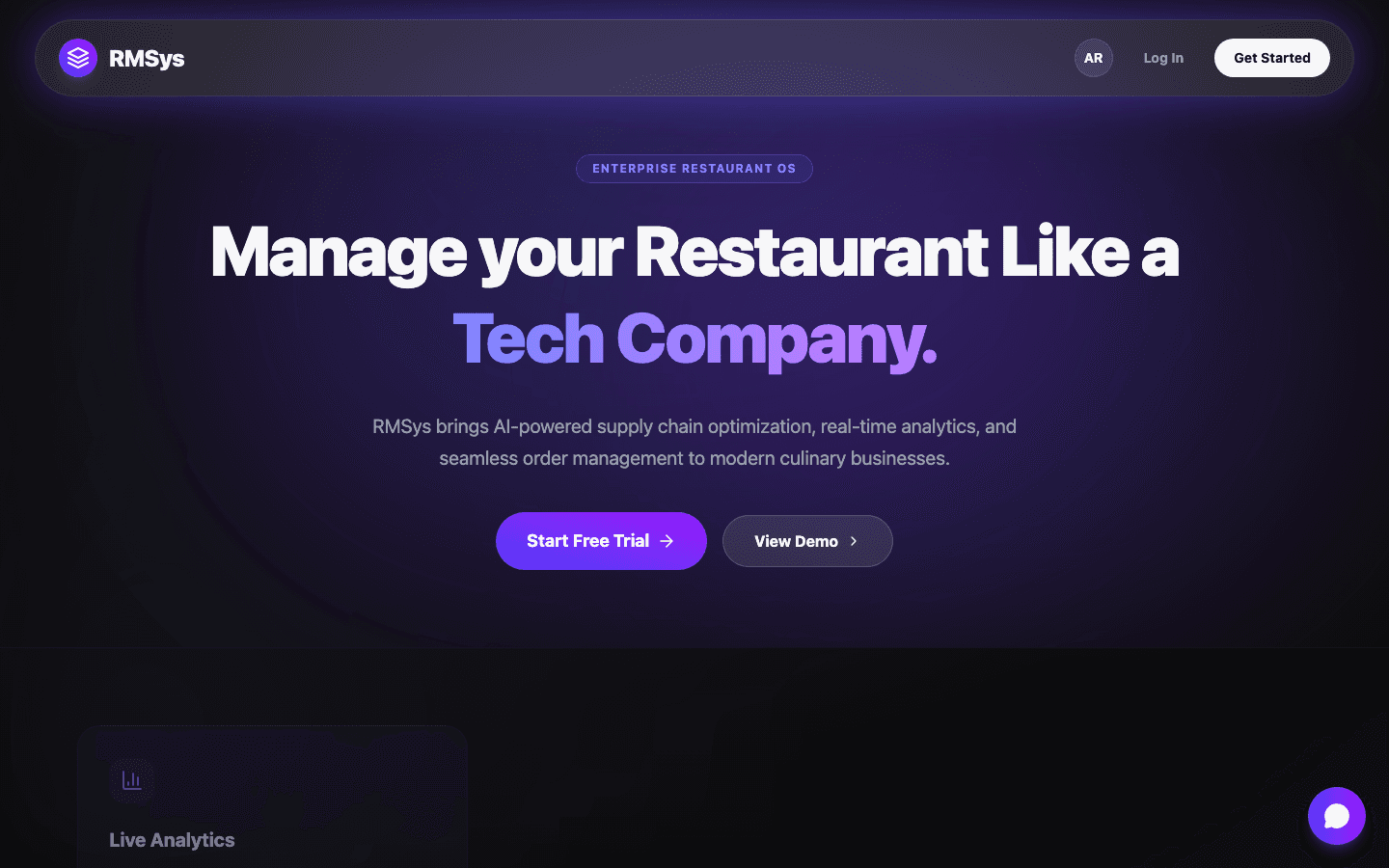
AI-powered restaurant operating system with live analytics, supply chain automation and order management.
- of operations automated
- 40%
- analytics
- Real-time
From first call to live system in 6–10 weeks.
A simple, low-risk process. You see working software every week, and you always know what’s next.
Step 1 · Day 1
Free audit.
A 30-minute call to map where time and money leak, and find the first thing worth automating. You leave with next steps, whether or not you hire us.
Step 2 · Weeks 1–2
Health Check or blueprint.
Start with the fixed-price Inventory Health Check, or go straight to a blueprint: we map the process, connect to your data sources and agree the numbers that define success. Either way you get a written scope, timeline and fixed price before anything is built.
Step 3 · Weeks 2–8
Build.
Weekly demos on your real data, integrated with your ERP, accounting system or spreadsheets. Your team shapes it as we go, so there are no surprises at launch.
Step 4 · Weeks 8–10
Launch and improve.
Go-live, training for your team and monitoring of the numbers we agreed. Then we find the next win.
Step 1 costs nothing and takes 30 minutes.Book your free audit
Landed Cost & Procurement Automation: common questions.
What is landed cost?
Landed cost is the total cost of getting a product to your door: the purchase price plus freight, insurance, customs duty, tariffs, brokerage and handling. It is the number to use when setting prices and comparing suppliers, because the cheapest quote is often not the cheapest product once it lands.
Where do the duty and tariff rates come from?
From you or your customs broker, by product code. We structure them so that one rate change updates every affected SKU. We don’t provide customs or legal advice.
How much does procurement automation cost?
Projects start at $10,000, depending on the number of suppliers, systems and workflows. You get a fixed quote after the free audit.
Do our suppliers need new software?
No. Suppliers keep using email or a simple web link. The automation runs on your side.
What is RFQ automation?
RFQ automation sends a request for quotation to your chosen suppliers, collects their replies in one place and compares price, lead time and terms side by side, so buyers pick a supplier without copying numbers between emails and spreadsheets.
Does it replace our ERP’s purchasing module?
No. Purchase orders stay in your ERP. The automation handles the steps around them: landed cost, quotes, follow-ups, delivery tracking and supplier scoring.
Let’s find your first win.
A free supply chain automation audit with a senior operator. Here’s what you get:
- 30 minutes on video, at a time that suits you
- Where your supply chain leaks time and money
- The first thing worth automating, and what it’s worth
- No obligation and no sales pitch
Prefer email?
Explore other services
Inventory Health Check
A two-week, fixed-price review of your stock: what to clear, what to reorder and how much cash it frees.
Supply Chain Dashboards
One live view of stock, orders and suppliers, pulled from the systems you already use.
AI Agents for Inventory Planning
Agents that forecast demand and recommend what to reorder. Your planners approve.